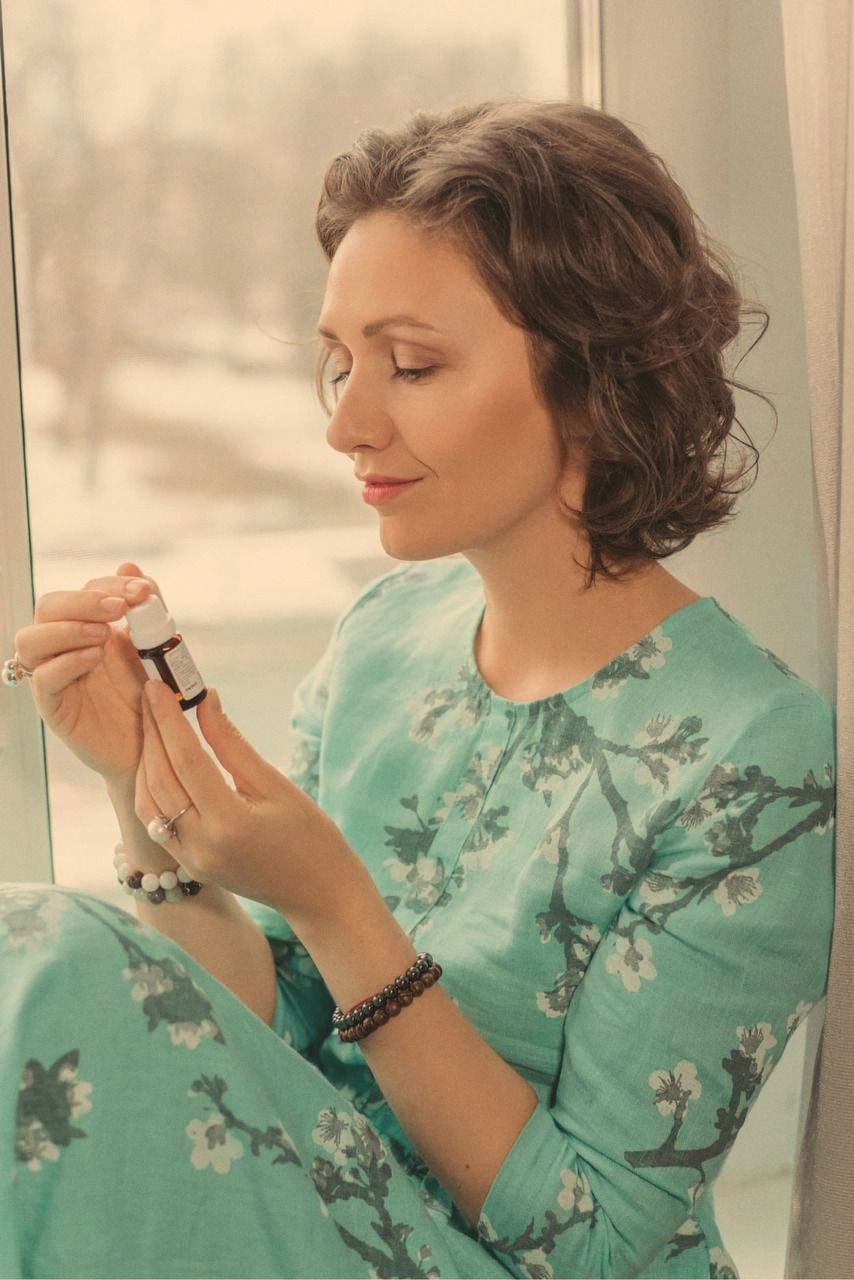
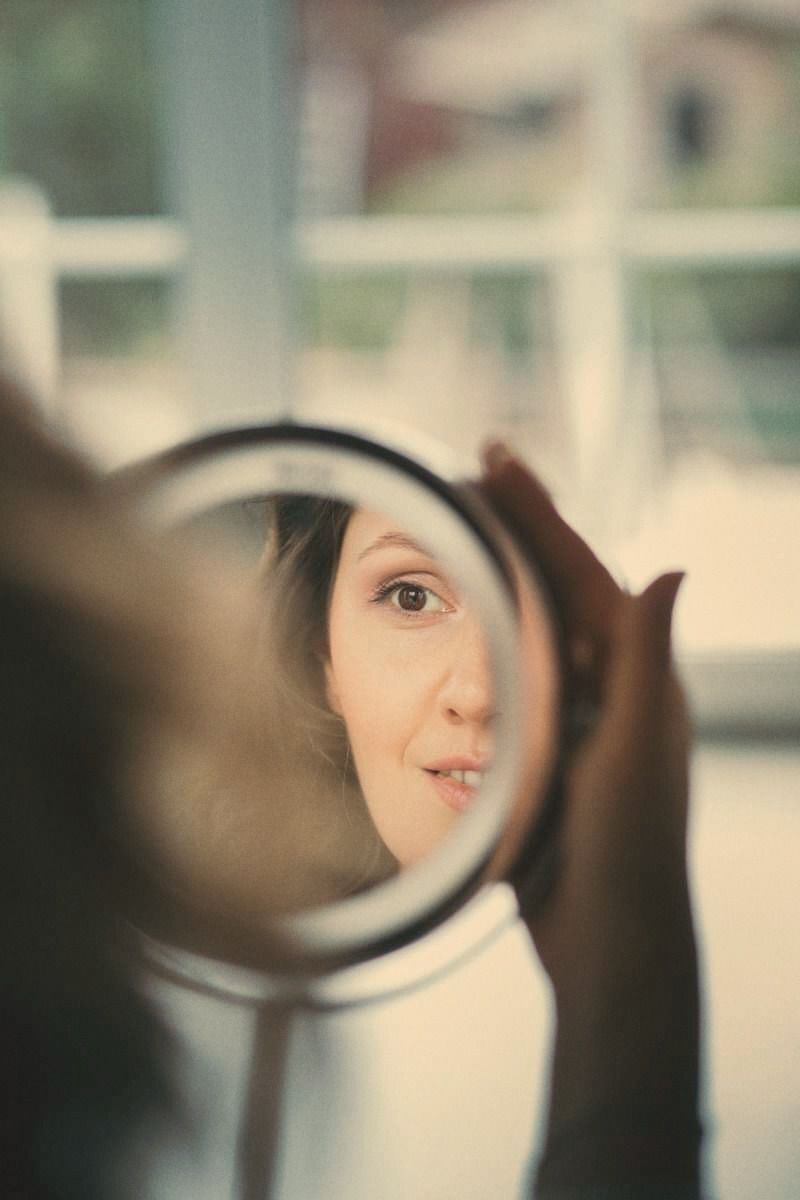
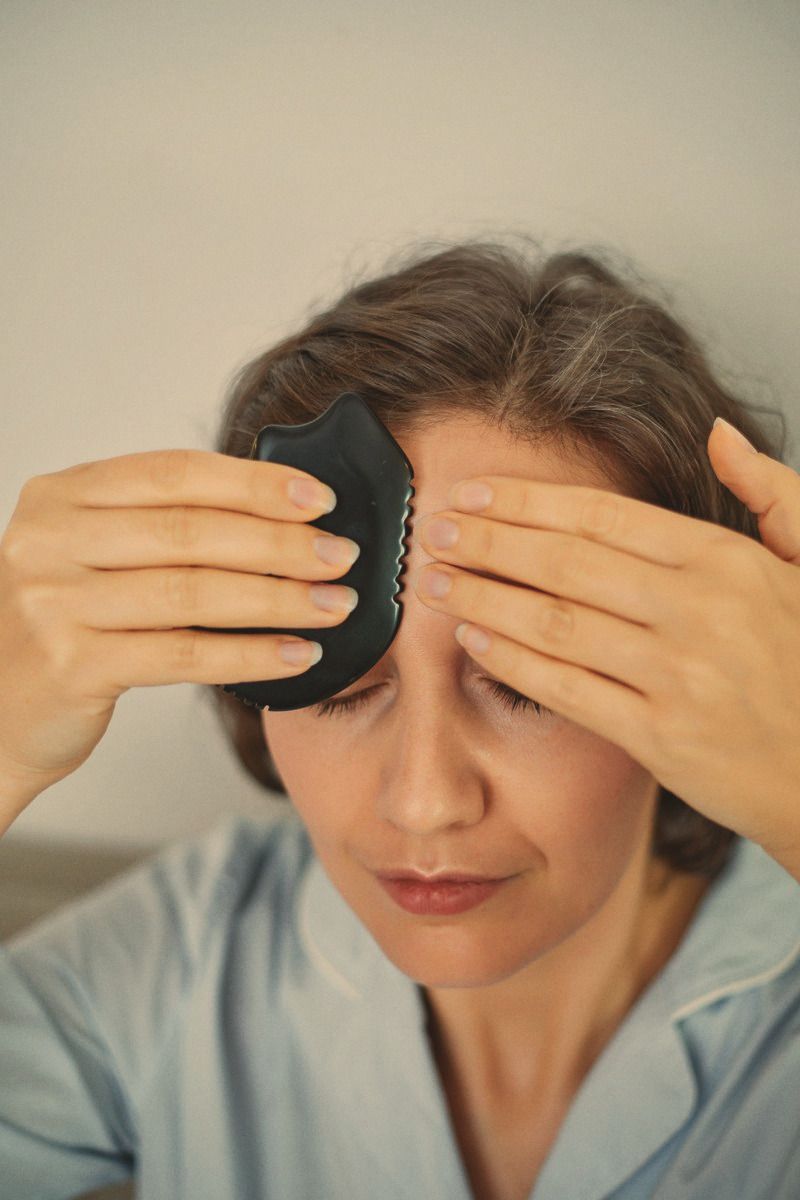
Beauty Pressure · Self-Worth
A woman is not a renovation project
Freedom from the inner critic was never about looking younger. It is about the right to be exactly who you already are, and what changes when the fight stops.
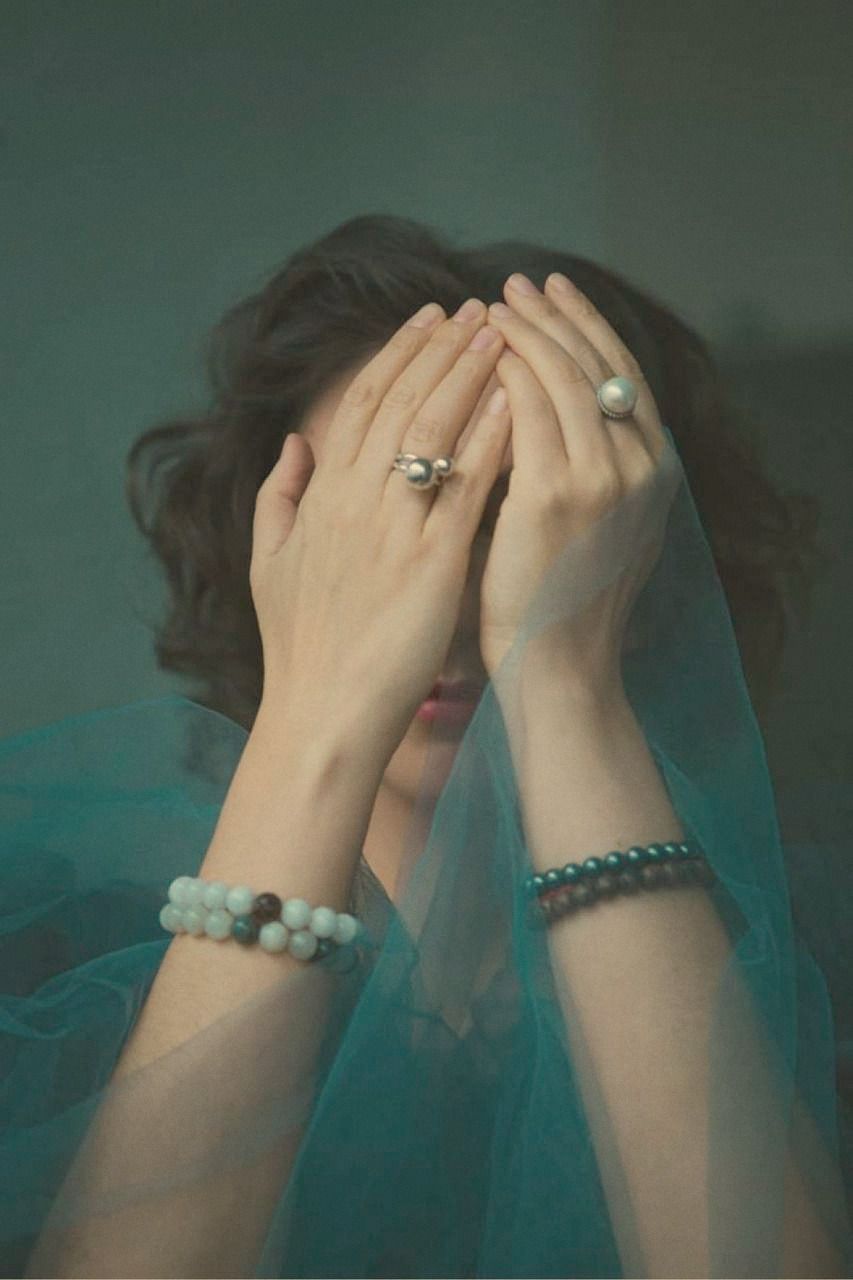
Officially, I no longer call myself a beauty coach.
More than fifteen years of guided facial self-practice taught me plenty about jaws, foreheads and the particular way a woman’s face holds a day she never got to put down. But every technique, the gua sha, the breath, the twice-daily ritual, was always a door, not the room itself. What actually changes when a woman stops fighting her own face is not her skin. It is her relationship to herself.
That is the whole idea behind A Woman Is Not a Renovation Project, a free hour online that we run as a conversation rather than a lecture. This post is the long version of why it exists.
The obvious view, and why it is incomplete
The obvious view says: soften the lines, and the self-criticism softens with them.
In fifteen years of watching faces up close, I have seen the opposite order more often. The self-criticism has to loosen first, a little, before the face can. You cannot relax a muscle you are actively at war with. A jaw that is being judged does not let go. A forehead that is being watched for wrinkles keeps working.
This is not a metaphor. Muscle tone follows the nervous system, and the nervous system follows what it believes about safety. A woman who has learned to read her own reflection as a list of problems is, physiologically, standing in front of a threat every morning. Her face responds the way a body responds to threat: it braces.
Where the war actually starts
The war rarely starts with the woman.
It starts with a culture that prices her appearance daily, and it gets worse, not better, when the person doing the pricing is someone she loves. A stranger’s opinion is noise. A partner’s running commentary on her face, her weight, her age becomes the voice she wakes up to. Over time she stops hearing it as his opinion and starts mistaking it for her own.
One of my subscribers once suggested that women go for the injections and the surgeries “out of boredom”. No. They do it out of fear. Because somewhere they were taught that if they are not perfect, nobody will love them and nobody will need them. That belief did not appear from nowhere. Somebody said it, often enough, close enough, that it moved in.
It is usually older than the partner, too. The way we relate to our own bodies is said to rest on three things: how our mother spoke about us, how she spoke about herself, and how she spoke about other women. Most of us inherited the critic before we could talk back to it.
What I actually believe
You are not a project to fix.
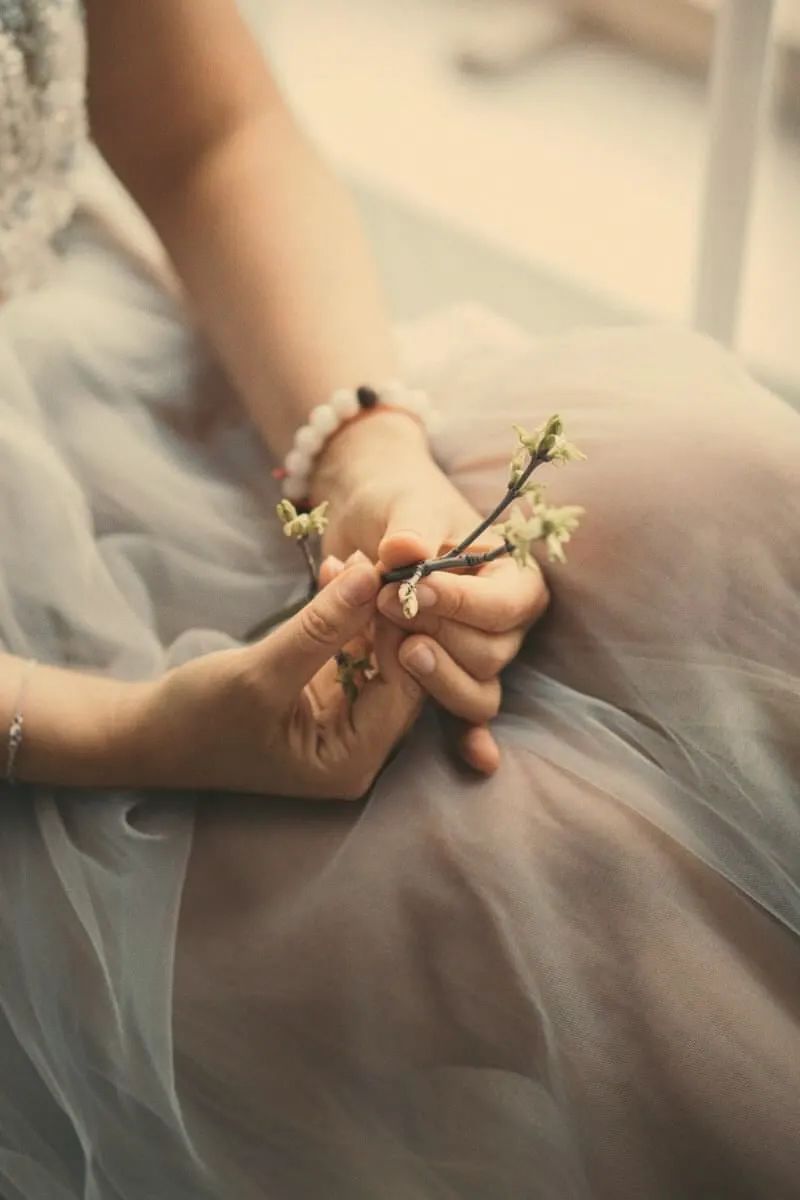
Not a renovation with a punch list. Not a before-photo waiting on an after. Your face is not evidence against you. It is a record of a life you actually lived, and it is allowed to show it.
This is not a claim that aging is easy, or that nobody should ever want to feel good in a new practice. It is a claim about where the want comes from. Wanting to feel more like yourself is not the same instruction as wanting to disappear the parts of yourself that a critic, internal or across the breakfast table, has decided are the problem.
I am not here for looking young. I am here for the right to be yourself. For freedom from shame and self-hatred. For freedom from the inner critic that keeps a tally of wrinkles, proportions and kilograms. For self-love without conditions.
Care or fear: the only question that matters
People sometimes hear all this and assume I am against skincare, against massage, against wanting to look rested. I wrote three books on the subject. I am not against any of it.
The question is never what you do to your face. It is why.
If I am doing something because I am afraid of aging, of rejection, of becoming less valuable, that is beauty pressure disguised as wellness. The same gua sha stone, the same five minutes at the mirror, can be an act of care or an act of fear, and the body knows the difference even when the mind has dressed it up. Fear tightens. Care softens. You can feel which one you are in by the state of your jaw while you do it.
So the practice is not the point. The practice is a portal. If it leads a woman toward herself, it has done its job. If it leads her further into correction, it has become one more thing she has to get right.
What changes when the fight stops
Here is what fifteen years of faces have shown me, and it is the reason I keep doing this work.
Behind relaxation, behind the refusal to keep fighting yourself, comes genuine acceptance. Then satisfaction. Then love. And that is exactly when a woman’s beauty and her strength become visible, not because anything on her face changed, but because she stopped hiding behind her own effort. The women who have crossed into that reality look at themselves and at the world with different eyes, and the world, in response, sees them differently.
It also gets easier in company. The world has forgotten what a woman at forty or fifty looks like without Botox and fillers. When a woman chooses to live her life without stuffing her face with substances, but she is surrounded by faces that do not move, she will feel uneasy. That is how the psyche works: we compare ourselves to whoever is nearest. So choose who is nearest carefully. That comparison should not be allowed to distort your reality. This is why Rare Human insists on real rooms, real faces and small groups; it is also why we built the two-night retreat around women who carry a lot and want to stop performing for a while.

Where I still catch myself
I will say the honest thing: I still catch my own inner critic mid-sentence more often than I would like.
I grew up in a post-Soviet culture where the worst thing was not failing. It was embarrassing yourself. Being too loud, looking stupid, taking up room. Perfectionism was never really about doing things perfectly; it was a way of protecting yourself from judgment. So you learn to hold yourself back, overthink everything and wait until you feel one hundred percent ready, and that feeling never comes.
Fifteen years in this work does not make a woman immune to any of that. It gives her a faster way to notice the voice, name whose it actually is, and put it back down. That is the skill. Not silence. Speed.
One thing to try this week
Tomorrow morning, before you do anything to your face, notice the first sentence you say to your reflection.
Just notice it. Do not argue with it, do not replace it with an affirmation, do not fix it. Then ask one question: whose voice is that? A mother’s, a partner’s, a magazine’s, a comment section’s? Very often it is not yours at all. You are simply the one who kept it.
Then do whatever you were going to do, the serum, the massage, the nothing. But do it from the answer to that question, not from the sentence.
This is education and shared practice, not therapy. If a critical voice, yours or someone else’s, is doing real damage, please talk to a clinician, not only to me.
If you want to go further, start with where your face holds the day, the map of what the jaw, eyes and forehead are carrying for you. If this is landing somewhere specific, A Woman Is Not a Renovation Project is the free, live online conversation on exactly this. The same talk is available for women’s ERGs and leadership programs.